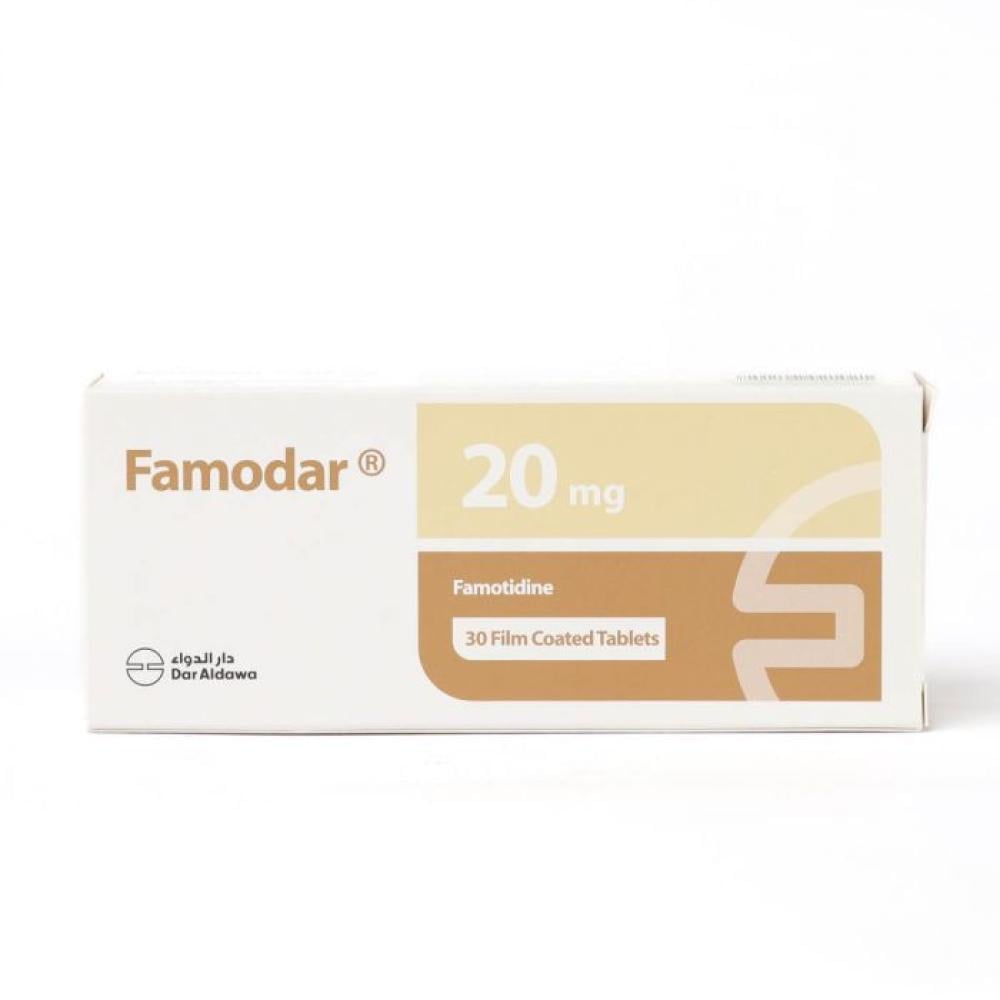
Famotidine is an H2 receptor antagonist used to treat ulcers.
Famotidine prevents histamine from binding to H2 receptors on the parietal cells in the stomach, reducing gastric acid secretion and thus preventing ulcers.
Medical uses of Famodar 20 mg tablets
Heals and stops stomach or small intestine ulcers
Treats and stops problems caused by stomach acid reflux into the esophagus
To reduce pain or discomfort known as indigestion, acid reflux, or heartburn
Prevents ulcers that may be caused by treatment with painkillers such as ibuprofen and diclofenac.
How to use Famodar 20 mg tablets
Always take this medicine exactly as your doctor or pharmacist has told you.
Consult your doctor or pharmacist if you are not sure.
Your doctor will tell you how many capsules to take and how long to take them. This will depend on your condition and age.
Usual dose: 20 to 40 mg orally twice a day.
Famotidine should not be given to children or teenagers.
Doses may be changed under special circumstances, so always follow your doctor or pharmacist's instructions.
If you take more medicine than you should, talk to a doctor or go to the hospital immediately.
If you forget to take a dose, take it as soon as you remember unless it is almost time for your next dose.
Do not take a double dose (two doses at the same time) to make up for a missed dose.
Side effects of Famodar 20 mg tablets
Although the following side effects are not common to everyone, some patients may experience:
dizziness
vomiting
nausea
sensitive
Use of Famodar 20 mg tablets during pregnancy and breastfeeding
If you are pregnant or breastfeeding, think you may be pregnant or are planning to have a baby, ask your doctor or pharmacist for advice before taking this medicine.
Helpful tips to relieve acidity and heartburn pain
Patients with GERD are advised to lose weight and avoid obesity, as studies have shown that obesity causes GERD and indigestion.
Avoid eating foods that cause acid reflux and gastritis, including fatty foods that contain a high percentage of fats and oils, spicy foods that contain spices, citrus fruits such as lemon, orange, and tomatoes, mint, chocolate, and onions.
Avoid soft drinks, alcohol, coffee, or any drinks containing caffeine.
Do not take any medication except under the supervision of your physician, as some side effects of medications affect stomach health and cause acid reflux and peptic ulcers.
Quit smoking or being around smokers, as some studies have shown that the nicotine in smoking relaxes muscles and causes pain and reflux in the esophagus.
Wearing loose clothing is one of the most important precautions that GERD patients are advised to take to prevent severe pain and inflammation.
Follow a healthy diet that contains vitamins and nutrients important for the health of the body, including eating vegetables and fruits.
Divide your daily meals into five small portions to prevent overeating and acid reflux. This also helps you avoid obesity and fat accumulation in the body.