
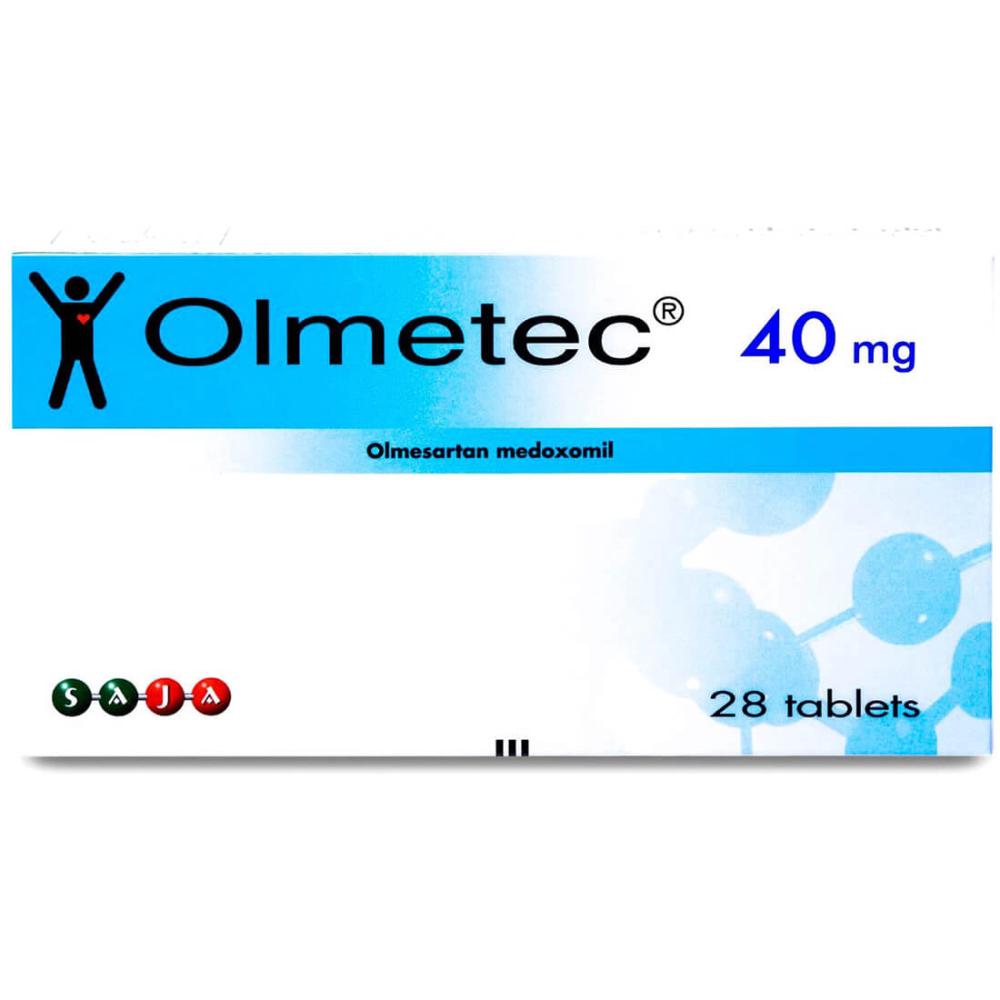
Olmetec 40 mg 28 tablets

Olmesartan Medoxomil 40 mg Film-coated Tablets
What are the uses of Olmesartan?
Olmesartan belongs to a group of medicines called angiotensin II receptor antagonists. It lowers blood pressure by relaxing blood vessels.
Olmesartan is used to treat high blood pressure in adults and children and adolescents aged 6 to under 18 years. High blood pressure can damage blood vessels in organs such as the heart, kidneys, brain, and eyes. In some cases, this can lead to a heart attack, heart failure, kidney failure, stroke, or blindness. High blood pressure usually has no symptoms.
Do not take olmesartan:
• If you are allergic to olmesartan medoxomil or any of the other ingredients of this medicine.
• If you suffer from yellowing of the skin and eyes or problems with bile drainage from the gallbladder.
• If you have diabetes or kidney dysfunction and are being treated with a blood pressure lowering medicine containing aliskiren.
Warnings and precautions
Tell your doctor if you have any of the following health problems:
• Kidney problems
• Liver disease
• Heart failure or problems with the heart valves or heart muscle.
• Severe vomiting, diarrhea, treatment with high doses of water tablets, or if you are on a low-salt diet.
• Increased potassium levels in the blood.
• Adrenal gland problems.
Possible side effects
Like all medicines, this medication can cause side effects, although not everybody gets them. When they do occur, they are usually mild and do not require stopping treatment. Although not everyone gets them, the following side effects can be serious: allergic reactions that may affect the whole body and low blood pressure.
Other side effects include:
• Dizziness, headache, nausea, indigestion, diarrhea, stomach pain, gastroenteritis, fatigue, sore throat, runny or stuffy nose, bronchitis, flu-like symptoms, cough, pain, chest pain, back pain, bone or joint pain, urinary tract infection, swelling of the ankles, feet, legs, hands, or arms, blood in the urine.
• Some changes in blood test results have also been noted and include: increased lipid levels, increased uric acid levels, increased blood urea, increased liver and muscle function tests, increased potassium levels, increased levels of compounds related to kidney function and decreased numbers of a type of blood cell known as platelets.
• Lack of energy, muscle cramps, impaired kidney function, kidney failure.
• In children, side effects are similar to those reported in adults. However, dizziness and headache occur more frequently in children, and nosebleeds are a common side effect that only occurs in children.
Other medications and olmesartan
Tell your doctor or pharmacist if you are using, have recently used, or might use any other medicines. In particular, tell your doctor or pharmacist about any of the following:
• Other medications to lower blood pressure
• Potassium supplements
• Lithium
• Nonsteroidal anti-inflammatory drugs
• Colesevelam hydrochloride, a drug that lowers blood cholesterol levels
• Some antacids
How to take olmesartan
• Always take this medicine exactly as your doctor has told you. Consult your doctor or pharmacist if you are not sure.
• The recommended starting dose is one 10 mg tablet once a day. However, if your blood pressure is not controlled, your doctor may decide to change your dose to 20 or 40 mg once a day, or prescribe additional medications.
• In patients with mild to moderate kidney disease, your dose will not exceed 20 mg once a day.
• The tablets can be taken with or without food. Swallow the tablets with plenty of water (for example, one glass). If possible, take your daily dose at the same time each day, for example, at breakfast time.
• Children and adolescents aged 6 to under 18 years: The recommended starting dose is 10 mg once daily. If the patient's blood pressure is not adequately controlled, the doctor may decide to increase the dose to 20 or 40 mg once daily.
• In children weighing less than 35 kg, the dose will not exceed 20 mg once a day.
How to store olmesartan
• Keep this medicine out of the sight and reach of children.
• Do not use this medicine after the expiry date printed on the carton and on the blister strip after “EXP.” The expiry date refers to the last day of that month.
• This medicinal product does not require any special storage conditions.
• Do not dispose of medications via wastewater or household waste. Ask your pharmacist how to dispose of medications you no longer use. These measures will help protect the environment.