
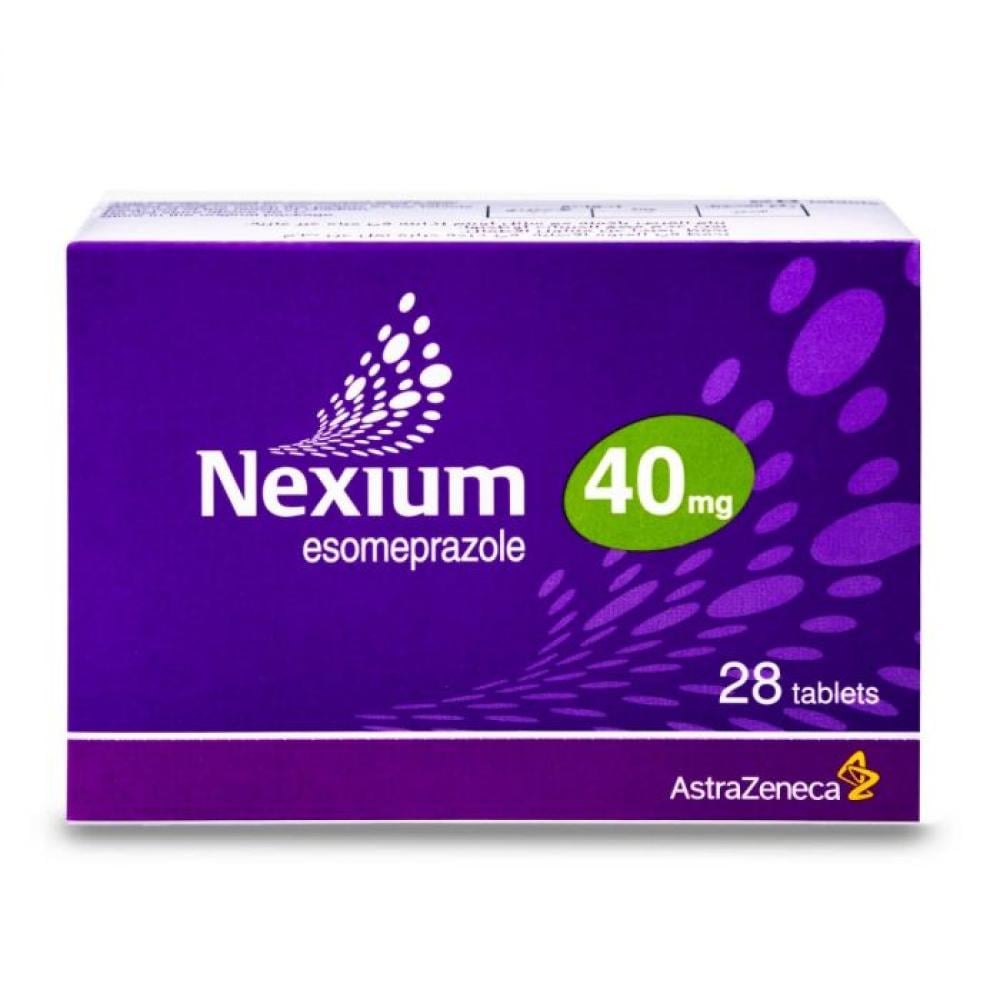
Nexium 40 mg 28 tablets

Esomeprazole 40 mg tablets
What is esomeprazole and what is it used for?
• Esomeprazole belongs to a group of medicines called proton pump inhibitors. They work by reducing the amount of acid your stomach produces.
• This medicine is used in adults for the short-term treatment of reflux symptoms (eg, heartburn and acid regurgitation).
• Reflux is the backflow of acid from your stomach into your esophagus (the food pipe), which may become inflamed and painful. This can cause symptoms such as chest pain that radiates to your throat (heartburn) and a sour taste in your mouth (acid regurgitation).
• Esomeprazole is not intended to provide immediate relief.
• You may need to take the capsules for 2-3 consecutive days before you feel better. You should talk to your doctor if you do not feel better or if you feel worse after 14 days.
What you need to know before using esomeprazole:
Do not use esomeprazole
• If you are allergic to esomeprazole or any of the other ingredients in this medicine.
• If you are allergic to medicines containing other proton pump inhibitors (such as pantoprazole, lansoprazole, rabeprazole, or omeprazole).
• If you are taking a medicine containing nelfinavir (used to treat HIV infection).
Warnings and Precautions:
You should tell your doctor if:
• You have had a stomach ulcer or stomach surgery in the past.
• You have been taking ongoing treatment for reflux or heartburn for 4 weeks or more.
• You have jaundice (yellowing of the skin or eyes) or severe liver problems.
• You have serious kidney problems.
• If you are over 55 years old and have new or recently changed reflux symptoms or need to take an over-the-counter indigestion or heartburn remedy every day.
• You have previously had a skin reaction after treatment with a medicine similar to esomeprazole that reduces stomach acid.
• You are scheduled to undergo an endoscopy or urea breath test.
• You are scheduled to have a specific blood test (chromogranin A).
Other medicines and esomeprazole:
• Do not take this medicine if you are taking a medicine containing nelfinavir (used to treat HIV infection).
• You must specifically tell your doctor or pharmacist if you are taking clopidogrel (used to prevent blood clots).
• Do not take this medicine with other medicines that reduce the amount of acid produced in your stomach, such as proton pump inhibitors (such as pantoprazole, lansoprazole, rabeprazole, or omeprazole) or H2 antagonists (such as ranitidine or famotidine).
Tell your doctor about the medications you are taking, especially if you are taking:
• Ketoconazole and itraconazole (used to treat infections caused by fungi).
• Voriconazole (used to treat infections caused by fungi) and clarithromycin (used to treat infections). Your doctor may adjust your dose of esomeprazole if you also have severe liver problems and have been treated for a long time.
• Erlotinib (used to treat cancer).
• Methotrexate (for treating cancer and rheumatic disorders).
• Digoxin (used for heart problems).
• Atazanavir, saquinavir (used to treat HIV infection).
• Citalopram, imipramine, or clomipramine (to treat depression).
• Diazepam (used to treat anxiety, muscle relaxation, or epilepsy).
• Phenytoin (used to treat epilepsy).
• Medications used to thin the blood, such as warfarin. Your doctor may need to monitor you when you start or stop taking esomeprazole.
• Cilostazol (used to treat intermittent claudication - a condition in which decreased blood flow to the leg muscles causes pain and difficulty walking).
• Cisapride (used for indigestion and heartburn).
• Rifampicin (used to treat tuberculosis).
• Tacrolimus (in cases of organ transplantation).
• St. John's wort (Hypericum perforatum) (used to treat depression). Risk of low threshold for seizures.
Children and adolescents:
Esomeprazole should not usually be used in children and adolescents under 18 years of age.
How to use esomeprazole:
Always take this medicine exactly as described in this leaflet or as your doctor or pharmacist has told you. Consult your doctor or pharmacist if you are not sure.
• The recommended dose is one capsule per day.
• Do not take more than the recommended dose of one capsule (20 mg) per day, even if you do not feel better right away.
• You may need to take the capsules for two or three consecutive days before your reflux symptoms (eg, heartburn and acid regurgitation) improve.
• The treatment period is up to 14 days.
• When your reflux symptoms completely disappear, you should stop taking this medicine.
• If your reflux symptoms worsen or do not improve after taking this medicine for 14 consecutive days, you should consult your doctor. If you have persistent or long-lasting symptoms that recur even after treatment with this medicine, you should contact your doctor.
• You can take the capsule at any time of the day, either with food or on an empty stomach.
• Swallow the capsule whole with half a glass of water. Do not chew, crush, or open the capsule. This is because the capsule contains coated globules, which prevent the medication from being broken down by the acid in your stomach.
• It is important not to damage the pellets.
Possible side effects:
Stop using the product and seek immediate medical attention if:
• Swelling of the face, lips, tongue, or throat, which may cause difficulty breathing or swallowing.
How to store esomeprazole:
• Keep this medicine out of the sight and reach of children.
• Do not use this medicine after the expiry date printed on the carton and bottle after EXP. The expiry date refers to the last day of that month.
• Do not store above 30°C.
• Keep this medicine in the original package to protect it from moisture.
• Do not dispose of medications via wastewater or household waste. Ask your pharmacist how to dispose of medications you no longer use. These measures will help protect the environment.