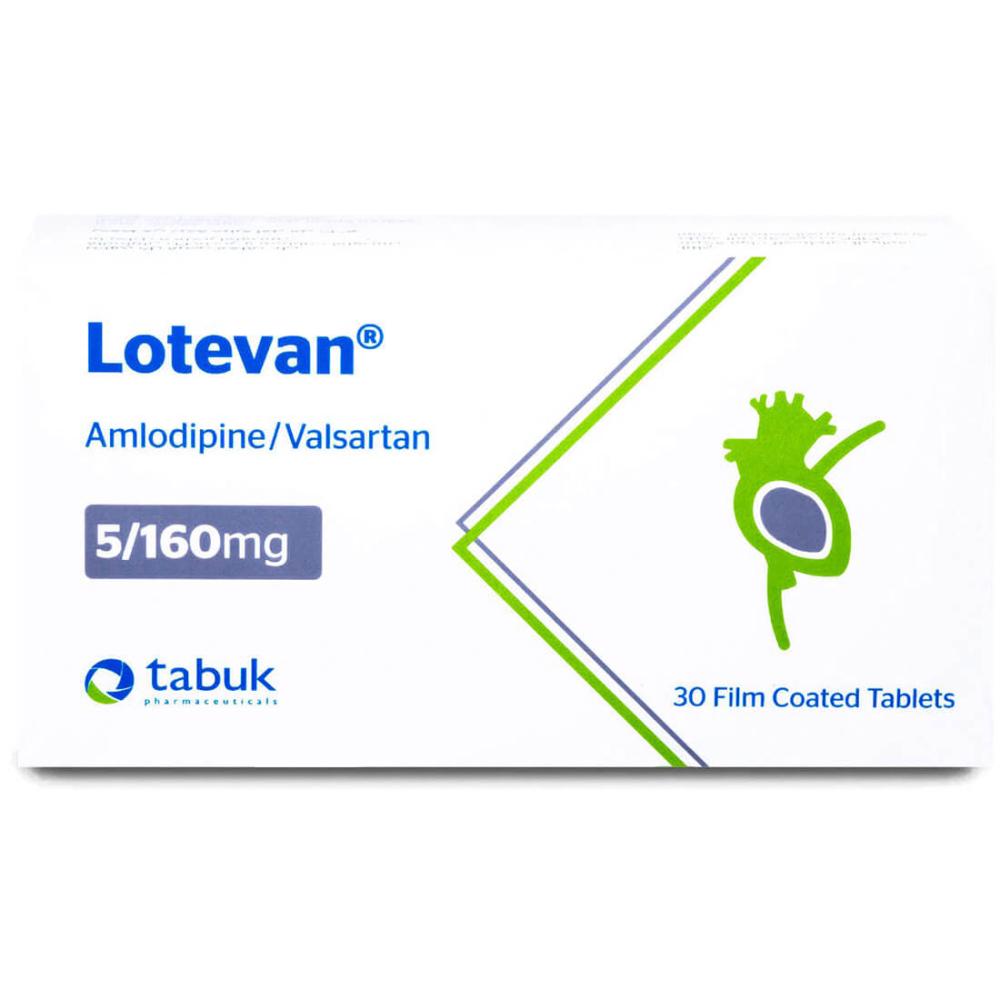
What is amlodipine/valsartan and what is it used for?
- Amlodipine/Valsartan tablets contain two substances called amlodipine and valsartan.
- These two substances help control high blood pressure.
- Amlodipine belongs to a group of substances called "calcium channel blockers." Amlodipine prevents calcium from moving into the blood vessel walls, preventing the blood vessels from narrowing.
- Valsartan belongs to a group of drugs called angiotensin II receptor antagonists. The body produces angiotensin II, which causes blood vessels to narrow, thereby increasing blood pressure. Valsartan works by blocking the effect of angiotensin II.
- This means that both of these substances help stop blood vessels from tightening.
- As a result, blood vessels relax and blood pressure decreases.
- Amlodipine/valsartan is used to treat high blood pressure in adults whose blood pressure is not adequately controlled with amlodipine or valsartan alone.
What you should know before taking amlodipine/valsartan:
Do not take amlodipine/valsartan:
- If you are allergic to amlodipine or any other calcium channel blockers.
- This may include itching, redness of the skin, or difficulty breathing.
- If you are allergic to valsartan or any of the other ingredients of this medicine.
- If you think you may be allergic to it, talk to your doctor before taking amlodipine/valsartan.
- If you have serious liver or bile problems such as biliary cirrhosis or cholestasis.
- If you are more than 3 months pregnant. (It is also best to avoid amlodipine/valsartan in early pregnancy.)
- If you have severe low blood pressure (hypotension).
- If you have aortic valve narrowing (aortic stenosis) or cardiogenic shock (a condition in which your heart is unable to supply enough blood to the body).
- If you have heart failure after a heart attack.
- If you have diabetes or impaired kidney function and are being treated with a blood pressure lowering medicine containing aliskiren.
Warnings and Precautions:
- Talk to your doctor before taking amlodipine/valsartan:
- If you are sick (vomiting or having diarrhea).
- If you have liver or kidney problems.
- If you have had a kidney transplant or if you have been told you have narrowing of the renal arteries.
- If you have a condition affecting your kidneys called primary hyperaldosteronism.
- If you have heart failure or a heart attack, follow your doctor's instructions for starting dosage carefully. Your doctor may also check your kidney function.
- If your doctor tells you that you have narrowing of the valves in your heart (called aortic or mitral stenosis) or that your heart muscle is thickening abnormally (called hypertrophic obstructive cardiomyopathy).
- If you experience swelling, especially of the face and throat, while taking other medicines (including ACE inhibitors). If you experience these symptoms, stop taking amlodipine/valsartan and contact your doctor immediately. You should not take amlodipine/valsartan again.
- If you are taking any of the following medications used to treat high blood pressure:
- Angiotensin-converting enzyme (ACE) inhibitors (eg, enalapril, lisinopril, ramipril), especially if you have kidney problems related to diabetes.
Children and adolescents:
- Amlodipine/valsartan is not recommended for use in children and adolescents (under 18 years of age).
Other medications and amlodipine/valsartan:
- Tell your doctor or pharmacist if you are taking, have recently taken or might take any other medicines.
- Your doctor may need to change your dose and/or take other precautions.
- In some cases, you may need to stop taking a medication.
- This applies particularly to the medications listed below:
- ACE inhibitors or aliskiren
- Diuretics (a type of medicine also called "water pills" that increases the amount of urine you produce)
- lithium (a medication used to treat some types of depression)
- Potassium-sparing diuretics, potassium supplements, salt substitutes containing potassium, and other substances may increase potassium levels.
- Certain types of painkillers called nonsteroidal anti-inflammatory drugs (NSAIDs) or selective cyclooxygenase-2 inhibitors (COX-2 inhibitors). Your doctor may also check your kidney function.
- Anticonvulsant agents (such as carbamazepine, phenobarbital, phenytoin, fosphenytoin, primidone)
- St. John's wort
- Nitroglycerin and other nitrates, or other substances called "vasodilators"
- Medicines used for HIV/AIDS (such as ritonavir, indinavir, and nelfinavir)
- Medicines used to treat fungal infections (such as ketoconazole, itraconazole)
- Medicines used to treat bacterial infections (such as rifampicin, erythromycin, clarithromycin, and talithromycin)
- Verapamil, Diltiazem (heart medications)
- Simvastatin (a medication used to control high cholesterol levels)
- Dantrolene (infusion in cases of severe abnormalities in body temperature)
- Medications used to prevent transplant rejection (cyclosporine)
Amlodipine/Valsartan with food and drink:
- Grapefruit and grapefruit juice should not be consumed by people taking amlodipine/valsartan. This is because grapefruit and grapefruit juice can increase blood levels of the active ingredient amlodipine, which could lead to an unexpected increase in the blood pressure-lowering effect of amlodipine/valsartan.
Pregnancy and breastfeeding:
Pregnancy:
- You should tell your doctor if you think you are (or may become) pregnant.
- Your doctor will usually advise you to stop taking amlodipine/valsartan before you become pregnant or as soon as you know you are pregnant, and will advise you to take another medicine instead of amlodipine/valsartan.
- Amlodipine/Valsartan is not recommended for use in early pregnancy (first 3 months), and should not be taken after more than 3 months of pregnancy, as it may cause serious harm to your baby if used after the third month of pregnancy.
Breastfeeding:
- Tell your doctor if you are breastfeeding or about to start breastfeeding.
- Amlodipine has been shown to pass into breast milk in small amounts. Amlodipine/valsartan is not recommended for use by breastfeeding mothers. Your doctor may choose another treatment option if you wish to breastfeed, especially if your baby is a newborn or born prematurely.
Driving and using machines:
- This medication may make you feel dizzy and lose your ability to concentrate. Therefore, if you are not sure how this medication affects you, do not drive, operate machinery, or perform other activities that require concentration.
How to take amlodipine/valsartan:
- The usual dose of amlodipine/valsartan is one tablet per day.
- It is best to take your medication at the same time each day.
- Swallow the tablets with a glass of water.
- You can take amlodipine/valsartan with or without food. Do not take amlodipine/valsartan with grapefruit or grapefruit juice.
- Depending on how you respond to treatment, your doctor may suggest a higher or lower dose. Do not exceed the prescribed dose.
- Amlodipine/Valsartan and the elderly (65 years or older)
- Your doctor should be careful when increasing your dose.
If you take more amlodipine/valsartan than you should:
- If you take too many amlodipine/valsartan tablets, or if someone else takes your tablets, consult a doctor immediately.
If you forget to take amlodipine/valsartan:
- If you forget to take this medicine, take it as soon as you remember. Then take your next dose at the usual time. However, if it is almost time for your next dose, skip the missed dose. Do not take a double dose to make up for a forgotten tablet.
If you stop taking amlodipine/valsartan:
- Stopping treatment with amlodipine/valsartan may make your condition worse. Do not stop taking your medication unless your doctor tells you to.
Possible side effects:
- Like all medicines, this medicine can cause side effects, although not everybody gets them.
- Some side effects may be serious and require immediate medical attention:
- A small number of patients have experienced these serious side effects (may affect up to 1 in 1,000 people).
If any of the following occur, tell your doctor immediately:
- An allergic reaction with symptoms such as skin rash, itching, swelling of the face, lips, or tongue, difficulty breathing, low blood pressure (feeling faint, light-headed).
Other possible side effects of amlodipine/valsartan:
- Common (may affect up to 1 in 10 people): Influenza, blocked nose, sore throat, and discomfort when swallowing; headache; swelling of the arms, hands, legs, ankles, or feet; tiredness; weakness; redness and a warm feeling in the face and/or neck.
- Uncommon (may affect up to 1 in 100 people): Dizziness; nausea and abdominal pain; dry mouth; drowsiness, tingling or numbness in the hands or feet; vertigo; fast heartbeat including palpitations; dizziness upon standing; cough; diarrhea; constipation; rash and skin redness; joint swelling and back pain; joint pain.
- Side effects reported with amlodipine or valsartan alone and either not observed with amlodipine/valsartan or observed with a higher frequency than with amlodipine/valsartan:
Consult a doctor immediately if you experience any of the following very rare, severe side effects after taking this medicine:
- Sudden wheezing, chest pain, shortness of breath, or difficulty breathing.
- Swelling of the eyelids, face, or lips.
- Swelling of the tongue and throat, causing great difficulty in breathing.
- Severe skin reactions including severe rash, hives, skin redness all over the body, severe itching, blistering, peeling, swelling of the skin, inflammation of the mucous membranes (Stevens-Johnson syndrome, toxic epidermal necrolysis) or other allergic reactions.
- Heart attack, irregular heartbeat.
- Pancreatitis, which may cause severe abdominal and back pain accompanied by feeling very unwell.
- Common (may affect up to 1 in 10 people)
- Dizziness and drowsiness; palpitations (awareness of your heartbeat); redness, swelling of the ankles (edema); abdominal pain, feeling sick (nausea).
Uncommon (may affect up to 1 in 100 people):
- Mood changes, anxiety, depression, insomnia, tremors, taste disturbances, fainting, loss of pain sensation; visual disturbances, visual impairment, and ringing in the ears; low blood pressure; sneezing/runny nose caused by inflammation of the lining of the nose (rhinitis); indigestion and vomiting (sickness); hair loss, increased sweating, itchy skin, skin discoloration; trouble urinating, increased need to urinate at night, increased frequency of urination; erectile dysfunction, discomfort, or enlargement of breasts in men, pain, feeling unwell, muscle pain, muscle cramps; weight gain or loss.
- Low red blood cells, fever, sore throat, or mouth ulcers due to infection; spontaneous bleeding or bruising; high blood potassium; abnormal liver test results; decreased kidney function or severe decreased kidney function; swelling, mainly of the face and throat; muscle pain; rash, red-purple spots; fever; itching; allergic reaction; skin blisters (a sign of a condition called bullous dermatitis).
How to store amlodipine/valsartan:
- Keep this medicine out of the sight and reach of children.
- Do not use this medicine after the expiry date printed on the package.
- Do not store above 30°C.
- Must be stored in the original container to protect from moisture.