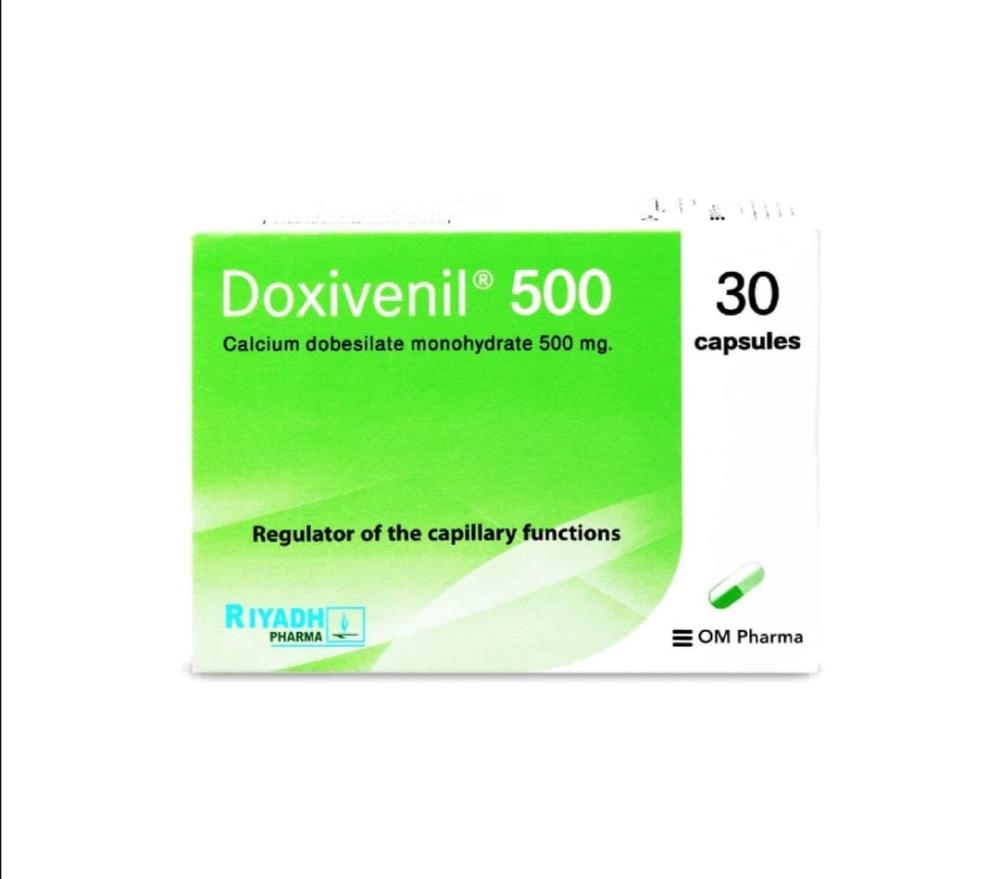
Why is calcium dopsylate used?
Calcium dopsylate is given to treat:
- Microvascular disorders, particularly diabetic retinopathy
- Clinical signs of chronic venous insufficiency in the lower extremities (pain, cramps, paresthesia, edema, stasis dermatitis), as an adjunct in superficial thrombophlebitis
- Hemorrhoid syndrome, microcirculation disorders of arteriovenous origin.
Do not use calcium dopsylate:
- If you are allergic to calcium dopsylate or any of the other ingredients of this medicine.
Precautions and warnings:
- Speak to your doctor or pharmacist before taking calcium dopsylate.
- In very rare cases, the administration of calcium dopsylate may lead to agranulocytosis.
- Calcium dobesylate may cause severe allergic reactions (anaphylactic reaction or shock) with symptoms such as skin reactions, fever, difficulty breathing, or dizziness. In this case, treatment should be stopped immediately and your doctor informed.
- Please also inform your doctor if you have kidney disease, especially if you need dialysis, as your dose may be reduced.
Possible side effects:
- Stop using the product and seek immediate medical attention if you experience throat tightness, swelling of the eyes, face, lips, or tongue, feel faint, or have difficulty breathing. Stop using the product if you experience hives or itching on your face or body.
Other medications and calcium dopsylate:
- Tell your doctor or pharmacist if you are taking/using, have recently taken/used, or might take/use any other medicines.
- So far, there have been no confirmed cases of interaction with other drugs.
How to use calcium dopsylate:
- Always take this medicine exactly as your doctor or pharmacist has told you.
- Consult your doctor or pharmacist if you are unsure.
- The recommended dose is:
- In general, 500 to 1000 mg - one capsule once or twice a day.
- The dose should be adjusted individually according to the severity of the condition.