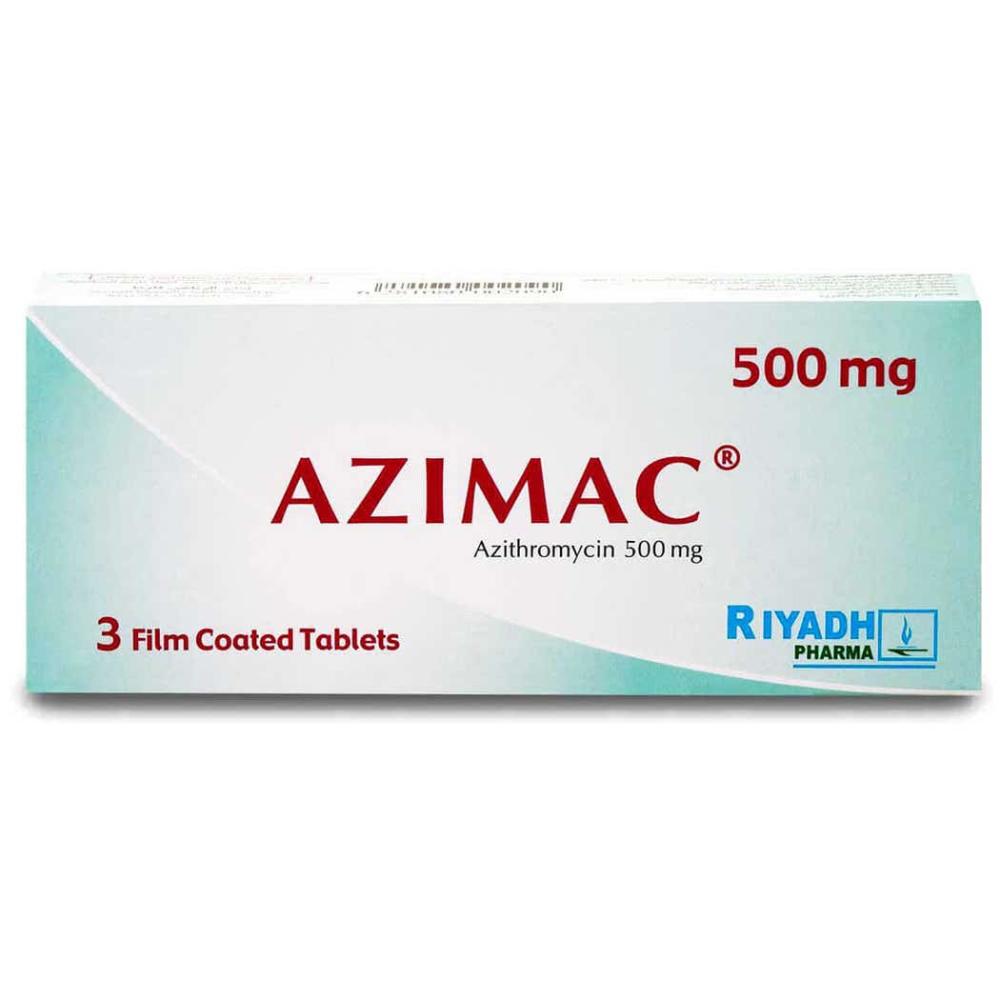
Why is azithromycin used?
- Chest, throat, or nose infections
- ear infections
- Skin and soft tissue infections
- sexually transmitted diseases
Do not take azithromycin:
- If you are allergic to azithromycin or any other macrolide antibiotic such as erythromycin or clarithromycin, or any of the ingredients of this medicine.
- An allergic reaction may cause a skin rash or wheezing.
Precautions and warnings:
Speak to your doctor or pharmacist before taking azithromycin if you have or have had any of the following conditions:
- kidney problems
- Heart disease
- Liver problems
- Myasthenia gravis
Possible side effects:
- Tell your doctor immediately if you experience any of the following symptoms after taking this medicine, as the symptoms may be severe.
- Sudden wheezing, difficulty breathing, swelling of the eyelids, face or lips, skin rash or itching.
- severe or prolonged diarrhea
- Rapid or irregular heartbeats
- Low blood pressure
Other medications and azithromycin:
Azithromycin may interact with the medications listed below:
- Ergot or ergotamine
- Warfarin
- Cyclosporine
- antacids
- Digoxin
- Colchicine
- Terfenadine
How to take azithromycin:
- The recommended dose for adults and children over 45 kg is 500 mg (capsule) taken once daily for 3 days.
How to store azithromycin:
- Keep this medicine out of the sight and reach of children. This medicine does not require any special storage conditions.
- Do not take this medicine after the expiry date stated on the package and carton after EXP.
- The expiry date refers to the last day of the same month.
- Do not dispose of medicines in sewage or household waste.